Journals
-
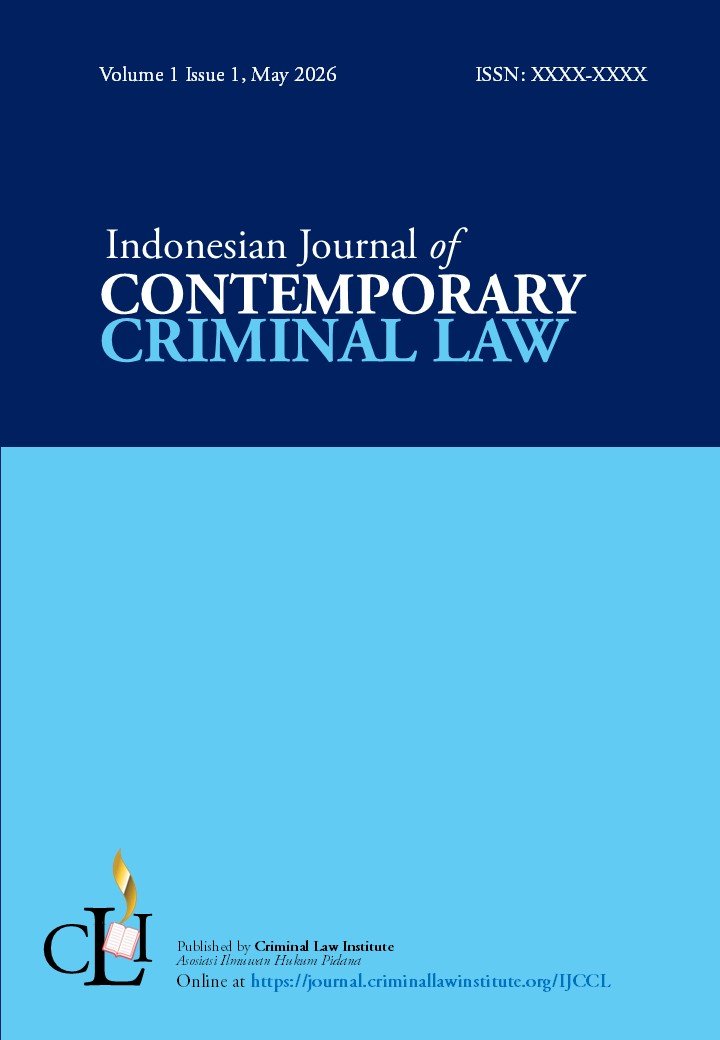
Indonesian Journal of Contemporary Criminal Law
Indonesian Journal of Contemporary Criminal Law (e-ISSN: 3163-8953 p-ISSN: 3164-0176) is a peer-reviewed scholarly journal dedicated to advancing critical and interdisciplinary studies in contemporary criminal law, criminal justice, and penal policy at national, regional, and global levels. The journal provides an academic platform for legal scholars, researchers, practitioners, and policymakers to examine emerging issues in substantive criminal law, criminal procedure, sentencing, criminology, victimology, cybercrime, transnational crime, corruption, environmental crime, human rights, and restorative justice. Emphasizing both doctrinal and socio-legal approaches, the journal welcomes original research articles that contribute to theoretical development, legal reform, comparative legal analysis, and evidence-based policy discourse within the evolving landscape of criminal law.The journal particularly encourages studies addressing the transformation of criminal law in Indonesia and Southeast Asia within the context of globalization, technological disruption, democratic governance, and international legal standards. It aims to foster rigorous academic debate on contemporary challenges such as digital criminality, artificial intelligence and criminal liability, corporate crime, terrorism, financial crime, prison reform, and access to justice. By promoting high-quality and internationally relevant scholarship, Indonesian Journal of Contemporary Criminal Law seeks to become a leading forum for innovative legal research and comparative perspectives that enrich both academic discourse and practical development in criminal justice systems worldwide.


-
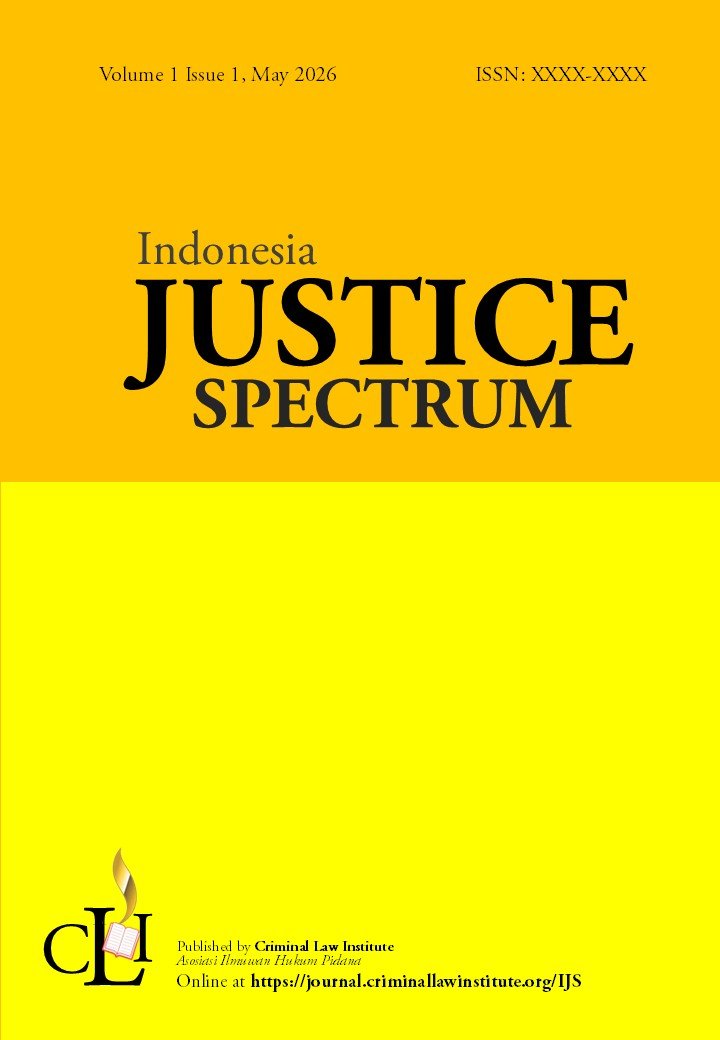
Indonesia Justice Spectrum
Indonesia Justice Spectrum (ISSN Online: 3163-7736 / ISSN Print: 3163-8023) is an interdisciplinary peer-reviewed journal that publishes high-quality scholarly works on contemporary issues in law, justice, governance, and public policy. The journal serves as a platform for academics, researchers, legal practitioners, and policymakers to critically examine the dynamic relationship between legal systems, social justice, human rights, criminal justice, constitutionalism, and institutional reform in both national and global contexts. The journal welcomes doctrinal, empirical, comparative, and socio-legal studies that contribute to the advancement of legal scholarship and promote innovative approaches to justice in rapidly changing societies.The scope of the journal encompasses a broad range of contemporary legal and justice-related topics, including criminal law, civil law, constitutional law, administrative law, digital governance, environmental justice, restorative justice, access to justice, corruption eradication, cyber regulation, legal technology, and international legal developments. Special attention is given to research exploring justice transformation in Indonesia and Southeast Asia within the framework of democracy, globalization, sustainability, and technological advancement. By encouraging critical and multidisciplinary perspectives, Indonesia Justice Spectrum aims to become an internationally recognized forum for impactful legal research and policy-oriented discourse with relevance to both regional and global audiences. -
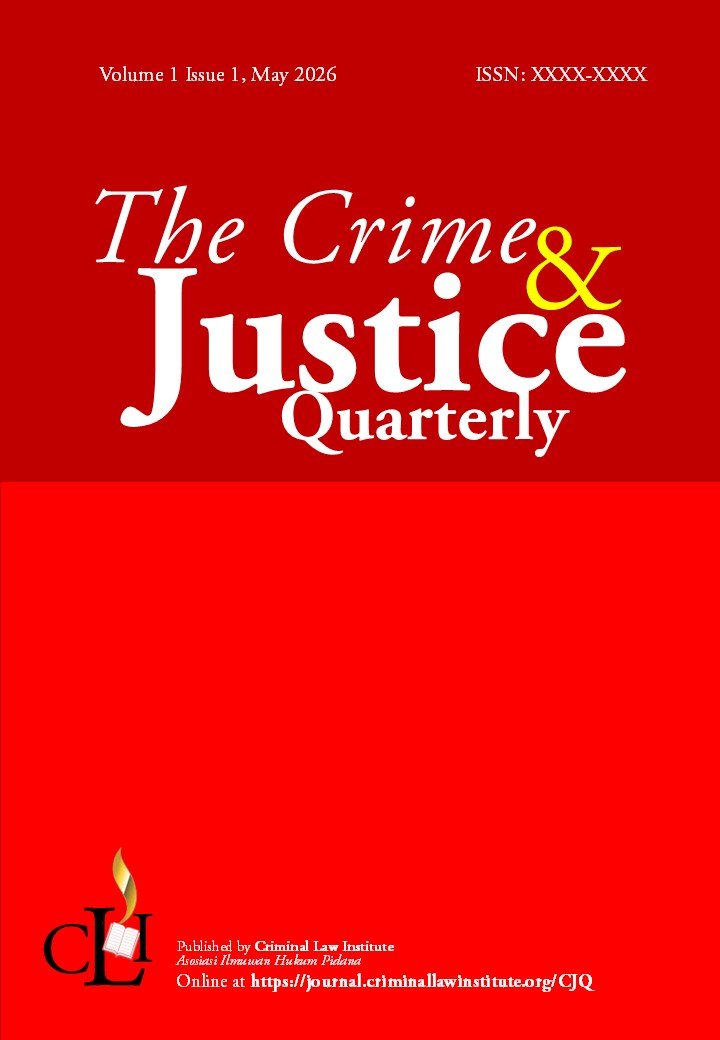
The Crime and Justice Quarterly
The Crime and Justice Quarterly (ISSN Print: 3163-849X ISSN Online: 3164-1865) is a peer-reviewed journal devoted to the study of crime, criminal law, criminal justice systems, and contemporary justice issues from interdisciplinary and comparative perspectives. The journal publishes original research articles, conceptual papers, and policy analyses that critically explore developments in criminal law, criminology, policing, prosecution, corrections, victimology, and justice reform. It aims to provide a rigorous academic forum for scholars, practitioners, and policymakers to discuss emerging challenges and innovative responses within modern justice systems at both domestic and transnational levels.The journal welcomes contributions addressing a wide spectrum of topics, including cybercrime, organized crime, terrorism, financial crime, corruption, environmental crime, artificial intelligence and criminal liability, restorative justice, human rights in criminal proceedings, prison reform, and comparative criminal justice policies. Emphasizing methodological diversity and international relevance, The Crime & Justice Quarterly encourages doctrinal, empirical, socio-legal, and interdisciplinary research that contributes to theoretical advancement and evidence-based policy development. The journal seeks to foster global scholarly dialogue and become a leading reference for contemporary studies on crime and justice in an increasingly complex and interconnected world. -
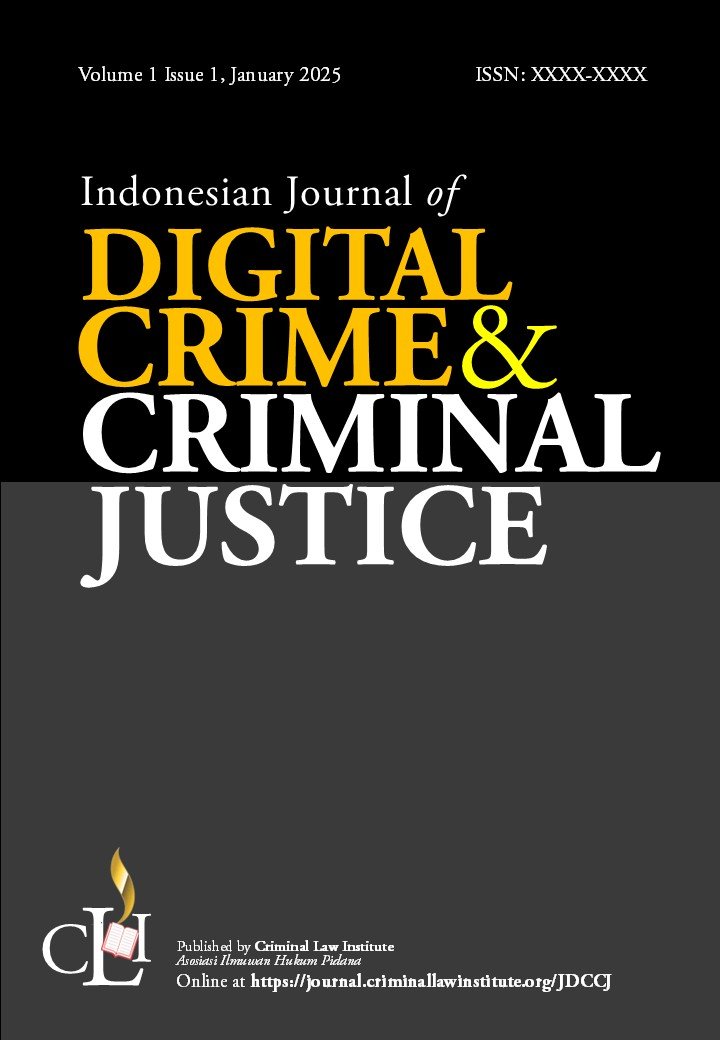
Indonesian Journal of Digital Crime and Criminal Justice
The Indonesian Journal of Digital Crime and Criminal Justice (Print ISSN: 3163-8368 / Online ISSN: 3164-0567) is a peer-reviewed scientific journal published by ILMUWAN HUKUM PIDANA (CRIMINAL LAW INSTITUTE). Established in 2025, the journal provides an academic platform for the publication of high-quality research on criminal law, criminal justice, digital crime, cyber law, cybersecurity, artificial intelligence and law, digital evidence, forensic technology, digital governance, and transnational criminal law. It welcomes original research articles, review articles, and conceptual papers from academics, researchers, practitioners, policymakers, and legal professionals.Published twice a year (January and July) in both online and print formats, the journal employs a rigorous double-blind peer review process to ensure the originality, quality, and academic integrity of every published manuscript. The journal encourages interdisciplinary and comparative studies addressing emerging legal and policy issues related to digital transformation, including cybercrime, digital investigations, criminal law reform, data protection, privacy, digital forensics, financial technology crimes, and other contemporary challenges in criminal law and criminal justice.